Physiotherapy for nerve and brain conditions
For Parkinson's, post-stroke and nerve conditions, steady home therapy helps keep movement and confidence.
- Clinically reviewed content
- Home visits around Alor Setar, Sungai Petani and Kulim
- English and Bahasa Malaysia
- A quick reply on WhatsApp
What neurological physiotherapy is
Neurological physiotherapy is for conditions that affect the brain, spinal cord or nerves. These include Parkinson’s, the after-effects of a stroke, and nerve conditions that change how a person moves.
These conditions can affect walking, balance, coordination and the strength of an arm or leg. The aim is to help the person move as well and as safely as possible.
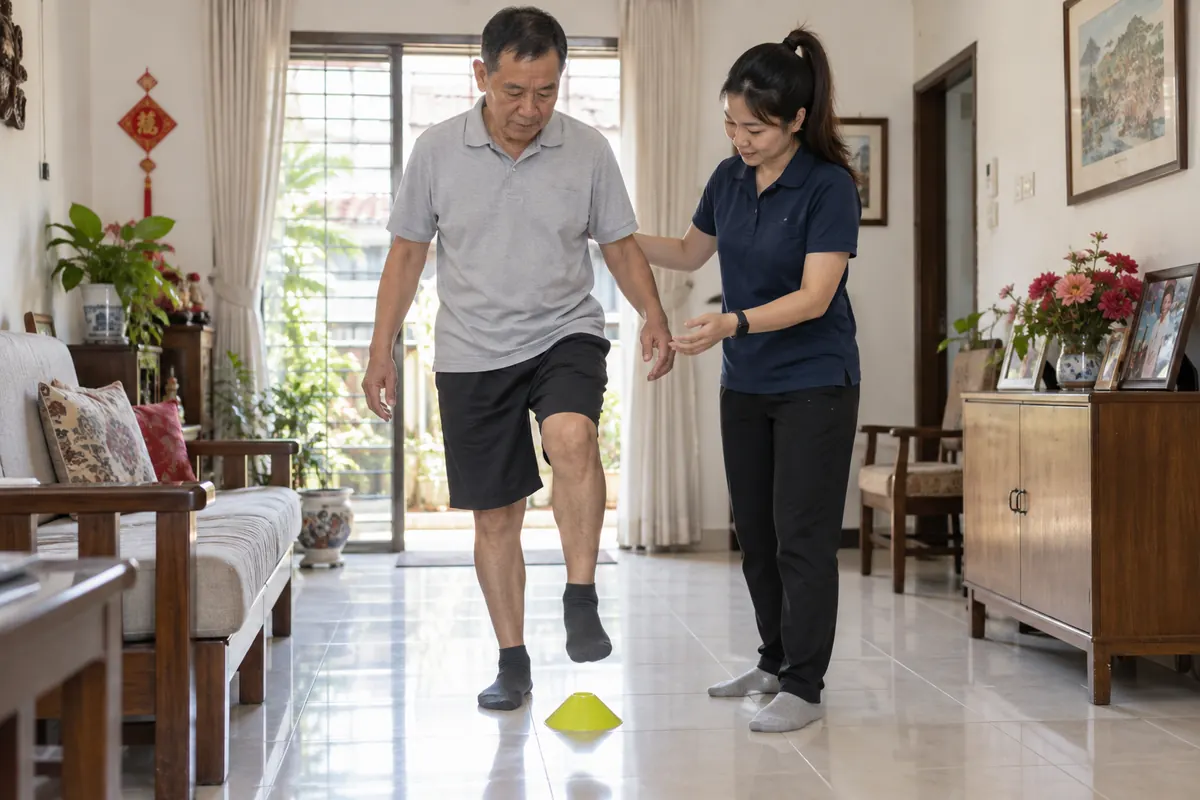
At home, the work fits the rooms and routines the person actually uses. Guidance for Parkinson’s supports referral to a physiotherapist for assessment, education and advice early in the condition.
Who this helps
This helps people living with Parkinson’s, those recovering from a stroke, and people with other nerve conditions that affect movement. It suits anyone who finds travel to a clinic tiring or unsafe.
Families often call when a parent’s walking has become slower or less steady, or when balance has started to fail.
Starting while the person is still moving helps protect the movement they have.
Setting realistic goals
Some neurological conditions improve over time, and some change slowly in the other direction. Realistic goals matter for both.
For a recovering condition, we work to regain movement and strength. For a slowly progressing one, we work to keep movement, ease stiffness and protect independence for as long as possible.
We explain clearly what physiotherapy can and cannot change, so the family can plan with confidence.
What the first weeks usually look like
The first weeks are about understanding how the condition actually affects this person, not a general plan. A physiotherapist checks walking, balance, strength and the tasks the family cares about most.
For Parkinson’s, physiotherapy that keeps movement large and deliberate, alongside balance and gait work, is offered when balance or motor function problems appear. Sessions are kept short and specific rather than long and tiring.
Early weeks also set the pattern for daily practice, so the caregiver knows what to reinforce between visits.
Home set-up and equipment
A clear, well-lit path between the bed, bathroom and main seating area reduces the risk of a fall. Removing loose rugs and trailing cables helps too.
Equipment such as a walking frame, raised chair or grab rail is suggested only when it is genuinely needed. The physiotherapist explains why before anything is added, so the home does not fill with things that are not being used.
Simple changes often help more than expensive equipment, especially in the early stages.
How progress is checked
Progress is checked against the specific goals set at assessment, not against a fixed timeline. A physiotherapist reviews walking speed and steadiness, balance during daily tasks, and how confident the person feels moving around the home.
For a slowly changing condition, “progress” can mean staying the same for longer than expected. We explain what we are watching for at each visit, so the family understands what a good result looks like.
Honest updates are shared after each visit, including when something needs more attention.
What a visit does
The first visit is an assessment of movement, balance and the tasks the family cares about most. We then set a small number of clear goals.
Sessions may include balance work, walking practice, gentle strengthening and stretches to ease tightness. For Parkinson’s, we often work on larger, more deliberate movements and steady walking.
Rehabilitation including physiotherapy can help improve functioning and quality of life, and can reduce the strain on carers. The caregiver learns how to support safe practice so progress continues between visits.
What the caregiver does between visits
Between visits, the caregiver’s main job is consistency. Short daily practice of what was shown, done regularly, matters more than an occasional long effort.
Watching for new changes is also part of the role: a new fall, more freezing during walking, or growing fatigue are all worth noting. A short written note helps the physiotherapist adjust the next visit.
The caregiver is never expected to guess. Each visit includes time to ask questions and check that home practice is being done safely.
When hospital neuro-rehabilitation is better
Home therapy is not always the right first step. Some people need hospital neuro-rehabilitation, where a full team and specialised equipment work together.
When a condition is newly diagnosed, changing quickly, or needs close medical monitoring, hospital-based care comes first. A neurologist or rehabilitation doctor may need to guide the plan.
We are glad to help you understand which route fits before you decide.
Questions worth asking early
A few useful questions help a family plan. What can physiotherapy realistically change for this specific condition, and what can it not change?
How often should sessions happen, and how will we know if the pace needs to change? What should the caregiver watch for at home between visits? We answer these at the first assessment, based on what we actually see.
If someone in your family has Parkinson's, a nerve condition or lasting effects from a stroke, tell us how it affects their movement and we will explain how home physiotherapy could help.
Common questions
Can physiotherapy help with Parkinson's at home?
Yes. For Parkinson's, physiotherapy focuses on keeping movement large and deliberate, improving balance, and making walking steadier and safer. It cannot stop the condition, but regular practice helps protect independence and confidence. We set realistic goals and teach the caregiver how to support daily practice at home.
What is the difference from stroke rehabilitation?
Stroke rehabilitation is one part of neurological physiotherapy. Neurological physiotherapy also covers Parkinson's and other nerve conditions. The principles are similar: assess movement, set clear goals, and practise the tasks daily life needs. We tailor the plan to the specific condition and how it affects the person.
Will physiotherapy make the condition go away?
Physiotherapy does not make a neurological condition go away, and we will never suggest otherwise. What it does is help a person move better, stay steadier, and keep independence for longer. For a recovering condition it helps regain function. After assessing, we explain realistic goals for your family member.
How soon should physiotherapy start after a Parkinson's diagnosis?
There is no need to wait until movement problems become serious. Starting review and gentle practice early, while someone still moves well, protects that movement for longer. A physiotherapist can assess and advise even before daily tasks feel difficult.
What does a caregiver actually do between visits?
The caregiver reminds the person to practise the movements shown at the last visit, watches for new falls or freezing, and keeps a simple note of changes. Consistent daily practice, even a short amount, matters more than one long session.
Which parts of Kedah do you visit?
We visit homes within about 30km of Alor Setar, Sungai Petani and Kulim. We do not cover Langkawi. Send us your location on WhatsApp and we will confirm whether a home visit suits the situation.
Sources
- NICE guideline NG71 recommends considering referral to a physiotherapist with Parkinson's experience for people in the early stages, for assessment, education and advice. NICE NG71, Parkinson's disease in adults (2026-09)
- NICE guideline NG71 recommends offering Parkinson's-specific physiotherapy to people who are experiencing balance or motor function problems. NICE NG71, Parkinson's disease in adults (2026-09)
- WHO states that rehabilitation, including physiotherapy, can offer relief for Parkinson's disease, can improve functioning and quality of life, and can reduce the strain on carers. WHO, Parkinson disease fact sheet (2026-09)
If someone in your family has Parkinson's, a nerve condition or lasting effects from a stroke, tell us how it affects their movement and we will explain how home physiotherapy could help.