Physiotherapy for sports and activity injuries
When a sprain, strain or overuse injury keeps you off the field, a home plan rebuilds you safely.
- Clinically reviewed content
- Home visits around Alor Setar, Sungai Petani and Kulim
- English and Bahasa Malaysia
- A quick reply on WhatsApp
What sports injury physiotherapy covers
This covers the sprains, strains and overuse injuries that come from sport, the gym, or simply being active: a rolled ankle, a pulled hamstring, tennis elbow, or a knee that has started to ache with training.
The aim is to settle the pain and rebuild the strength and control needed to return to what you were doing, safely.
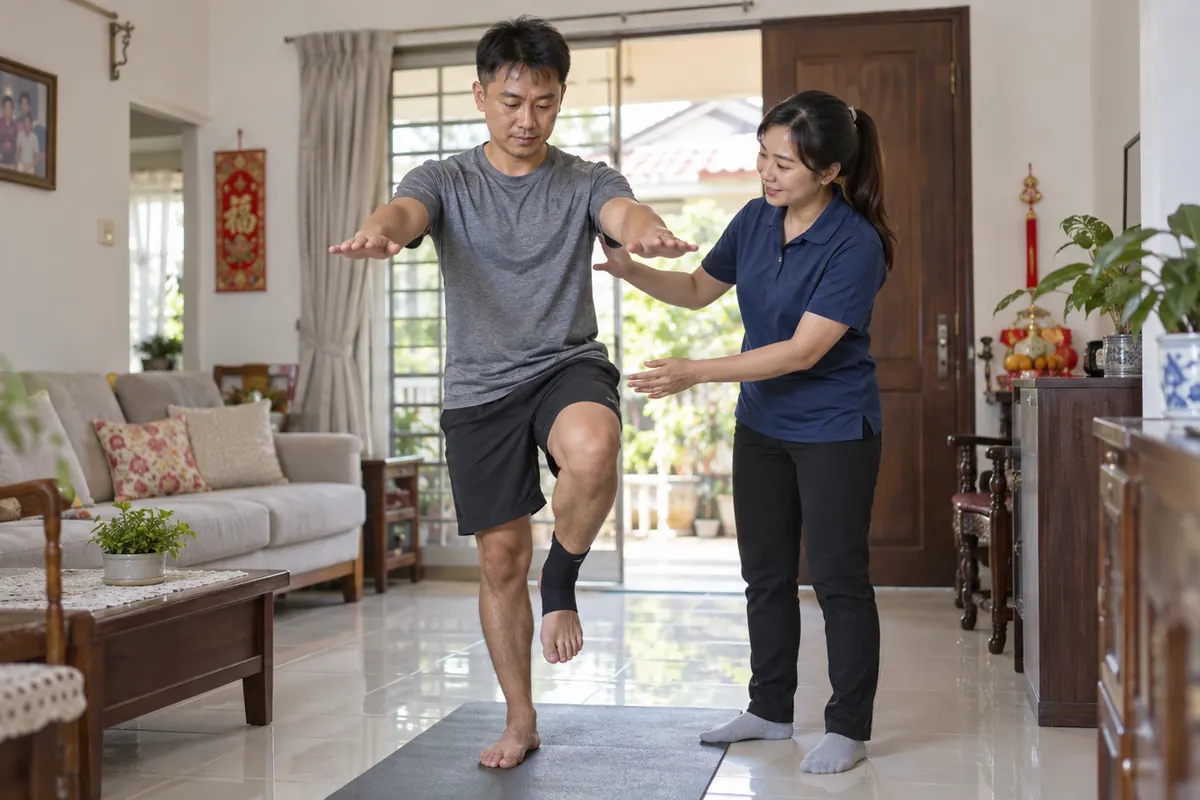
At home, the plan works around the exercise space and routine you already have.
Who this helps
This helps people who play sport, train regularly, or stay active for work or fitness. It also helps anyone with an old injury that never fully settled.
Many people choose home visits because clinic hours clash with work or training. Early exercises are also easier to learn in the space you will actually use them.
If you need gym-based equipment for a later stage of recovery, a clinic can add real value, and we say so.
How recovery is paced
Early after an injury, the priority is protecting the area and calming swelling and pain, without losing all movement. Protection, rest, ice, compression and elevation for the first 2 to 3 days are a well-known first step for a sprain or strain, and we build on that with the person in front of us.
As it settles, the plan adds strength and control work. It builds toward the demands of your sport, not just “no longer hurts.”
Progress is reviewed at each visit. Coming back too early is one of the most common causes of re-injury, so pacing this matters more than speed.
What the first two weeks usually involve
The first few days focus on settling swelling and protecting the injury while keeping some gentle movement going, so the joint or muscle does not stiffen up.
From there, a physiotherapist checks how the tissue is healing and starts adding light strength and balance work. Most sprains and strains feel noticeably better within about two weeks, though strenuous exercise may need to wait longer.
Every case heals at its own pace. We adjust the plan at each visit rather than following a fixed calendar.
Staying active while you heal
Total rest is rarely the answer for long. Regular activity, matched to what the injury can currently manage, supports recovery and overall health, so we look for safe ways to keep moving early on.
This might mean adjusting technique, training a different body part, or simply reducing load rather than stopping altogether. A physiotherapist helps you judge what is safe on a given day.
Staying engaged with movement, even in a reduced way, also helps confidence stay intact for the return ahead.
When a scan or doctor comes first
Physiotherapy is not always the right first step. A suspected fracture, a locked or unstable joint, or a significant tear usually needs imaging or a doctor’s assessment first.
If what you describe suggests one of these, we will say so. We will point you toward the right next step before any home plan begins.
Getting back to real activity
The last stage of a good recovery is often skipped: building the confidence and control to return to your actual sport, beyond everyday movement.
We work on this deliberately. Returning to play should not mean returning to the same weakness that led to the injury in the first place.
How progress is checked
Each visit starts with a short check of how the injury has responded since the last session: pain, swelling, range of movement and strength.
This is not guesswork. A physiotherapist compares what you can do now with what you could do at the last visit, and adjusts the plan accordingly.
If progress has stalled or gone backwards, we say so and look at what might be slowing things down, rather than simply repeating the same exercises.
Small, steady gains from visit to visit are a better sign than one dramatic improvement followed by a setback. We would rather move slightly slower and stay on track.
Questions worth asking early
A few useful questions help you plan. How long is this injury likely to need before I can train again? What signs mean I should stop and get it checked?
What can I keep doing safely while this heals, and what should I avoid for now? We answer these at the first assessment, based on what we actually see, not a general rule of thumb.
If a sprain, strain or overuse injury is keeping you off the field or out of the gym, tell us what happened and how it feels now, and we will explain how a home plan could help.
Common questions
Can physiotherapy help a sprained ankle or pulled muscle?
Yes, for most sprains and strains. Early on we focus on reducing swelling and protecting the area, then rebuild strength and movement in stages. Rushing this usually causes a setback, so we pace it to how the tissue is actually healing, not a fixed calendar.
Do I need a scan before starting?
Not always. Many sprains, strains and overuse injuries can start with a physiotherapy assessment. If something suggests a fracture, a full ligament tear, or another injury a scan should confirm, we say so and point you to get one before a plan begins.
Will this help me get back to sport, not just walk normally?
That is the goal, not just resting the injury. Once the basics are pain-free, we work on the strength, control and confidence needed for your sport or activity, so returning does not mean returning to the same risk.
How long does a sprain or strain usually take to settle?
It varies with the injury and the person. Mild sprains often feel better within about two weeks, while a return to running or sport can take longer. We check progress at each visit rather than promising a fixed date.
What happens if I keep training through the pain?
It often makes recovery slower, not faster. Training through pain can turn a mild injury into a longer-term problem. We help you find safe ways to stay active while the injury heals properly.
Which areas of Kedah do you cover?
We visit homes within about 30km of Alor Setar, Sungai Petani and Kulim. We do not cover Langkawi. Tell us where you are on WhatsApp and we will confirm whether a visit fits.
Sources
- NHS guidance recommends protection, rest, ice, compression and elevation (PRICE) for the first 2 to 3 days after a sprain or strain, then gentle movement once pain allows. NHS, Sprains and strains (2026-09)
- NHS guidance notes a sprain or strain usually feels better after 2 weeks, but strenuous exercise may need to wait up to 8 weeks, since returning too soon risks further damage. NHS, Sprains and strains (2026-09)
- WHO notes that regular physical activity, done at a level that suits the person and the injury, supports long-term health and helps rebuild function safely. WHO, Physical activity fact sheet (2026-09)
If a sprain, strain or overuse injury is keeping you off the field or out of the gym, tell us what happened and how it feels now, and we will explain how a home plan could help.