Helping an older parent stay independent
When an older parent grows weaker, gentle work at home helps them keep doing daily things.
- Clinically reviewed content
- Home visits around Alor Setar, Sungai Petani and Kulim
- English and Bahasa Malaysia
- A quick reply on WhatsApp
What elderly physiotherapy at home is
As people age, muscles weaken and balance fades, and simple things like standing up become harder. Elderly physiotherapy helps an older person keep strength, steadiness and independence.
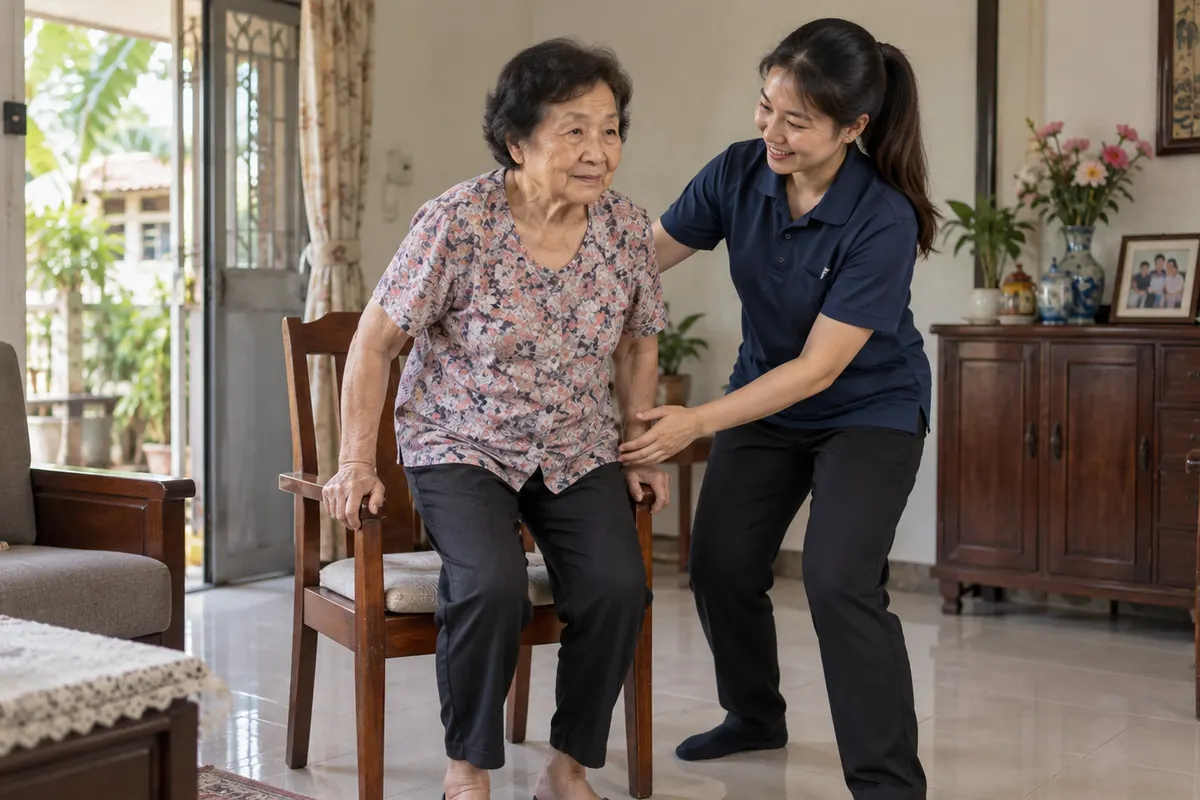
At home, a registered physiotherapist works with the tasks that matter to daily life. Getting out of bed, walking to the bathroom and rising from a favourite chair are all practised where they happen.
The pace is gentle and matched to how the person feels each day. Regular physical activity for older adults is linked to a lower risk of falls. It also supports better mental and cognitive health, which is part of why steady practice matters.
Who benefits most
This suits older adults who have become weak, slow or unsteady, often after an illness or a long rest in bed. It also helps parents who have had a fall, or who are starting to avoid walking out of fear.
Families who notice a parent struggling to stand or needing help more often gain from starting early.
If a parent is active and travels easily, a day-care or clinic programme can also be a good fit.
Balance, walking and getting up
Much of the work is practical and built around daily movement. We work on balance so standing and turning feel safer, and on leg strength so walking is steadier.
Getting up from a chair, a bed or the toilet is practised until it feels reliable. These are the moments where many older adults lose confidence or fall.
We also look at how the person walks and whether a stick or frame would help. NHS guidance for adults aged 65 and over recommends strength, balance and flexibility activities on at least 2 days a week. This is part of how a home programme is paced.
What the first weeks usually look like
The first weeks are about finding a safe, comfortable starting point. A physiotherapist checks how the person stands, walks a short distance, and manages a chair or the toilet.
Sessions are kept short and are repeated often, since older muscles respond best to frequent, gentle practice rather than one hard push. Small daily tasks, done consistently, are the main tool.
It is normal for confidence to return before strength does. Both usually keep building together over the following weeks.
Home set-up for safer daily movement
Simple changes around the home often lower the effort and the risk in daily tasks. A firm chair with arms, a clear path to the bathroom, and good lighting at night all help.
Grab rails, a raised toilet seat or a walking stick are suggested only when the physiotherapist sees a genuine need, and the reason is explained clearly first.
We also look at footwear, since loose slippers make standing and walking less stable.
What a visit does and how the family helps
The first visit is an assessment of strength, balance and the daily tasks the family is worried about. From there we agree a few simple goals.
Each session is gentle and builds slowly. We show the caregiver how to encourage safe practice, and how to help without doing everything for the parent.
Keeping the person moving a little each day is what makes the progress last.
When a day-care or clinic suits better
Home physiotherapy is one good option among several. A parent who is still active and enjoys company may do well at a day-care or clinic programme.
These settings offer group activity, larger equipment and social contact that some older adults value. For a new medical problem that needs tests, a doctor should see the person first.
We are glad to talk through which choice fits your parent before anything begins.
What the family does between visits
Between visits, the caregiver keeps the small habits going: a short walk, careful standing practice, or the exercises shown at the last session.
Little and often works better than one long effort saved for visit day. A short, safe walk to the kitchen still counts as real progress.
If something feels unsafe to try without help, the caregiver is told to wait for the next visit rather than risk it alone.
How progress is checked
Progress is tracked against what the person could do at the first visit, not a fixed timeline. A physiotherapist notes small changes: standing a little longer, turning more steadily, or needing less help on the stairs.
If a goal stalls, we say so and adjust the plan rather than repeating what is not working. The family is kept in that conversation, not left to guess from the outside.
If you have noticed an older parent growing weaker or less steady at home, tell us what you are seeing and we will explain how gentle physiotherapy could help them stay independent.
Common questions
My parent has just become weak and slow. Can physiotherapy help?
Often yes. Weakness after an illness or a long rest in bed can improve with gentle, regular exercise. We assess what your parent can do safely, then build strength and balance around daily tasks. Progress is usually gradual, and we explain what to expect after the first visit.
Is physiotherapy safe for a very frail elderly person?
Yes, when it is gentle and matched to the person. We start small, watch how the body responds, and never push beyond what is safe that day. For a very frail parent, even light movement and safe standing practice can protect strength and confidence over time.
How often would my parent need visits?
It depends on their goals and how they respond. Some need a short block to recover strength, others benefit from steady support over a longer period. After the first assessment we suggest a realistic schedule, and you decide what suits your family.
Which areas of Kedah do you cover?
We visit homes within about 30km of Alor Setar, Sungai Petani and Kulim. We do not cover Langkawi. Message us on WhatsApp with where your parent lives and we will confirm whether a visit fits.
What does the family do between visits?
Small daily movement matters more than one long session. We leave simple, specific things to practise, such as standing up carefully or a short walk indoors. If something feels unsafe to try alone, we say so, and it waits for a supervised visit.
How do you check whether progress is actually happening?
We track a few simple things from the first visit, such as how steady standing feels or how far a walk goes. At each visit we compare against that starting point, not against a fixed target date. If the plan is not helping, we change it and explain why.
Sources
- NHS guidance for adults aged 65 and over recommends activities that improve strength, balance and flexibility on at least 2 days a week. NHS, Physical activity guidelines for older adults (2026-09)
- WHO states that for adults and older adults, regular physical activity is associated with a reduced risk of falls, alongside better mental and cognitive health. WHO, Physical activity fact sheet (2026-09)
If you have noticed an older parent growing weaker or less steady at home, tell us what you are seeing and we will explain how gentle physiotherapy could help them stay independent.