Easier breathing for a frail patient
When a bedridden or frail person struggles with a heavy chest, gentle chest physiotherapy at home can help.
- Clinically reviewed content
- Home visits around Alor Setar, Sungai Petani and Kulim
- English and Bahasa Malaysia
- A quick reply on WhatsApp
What chest physiotherapy is
Chest physiotherapy, also called respiratory physiotherapy, helps a person breathe more easily and clear phlegm from the chest. It matters most for people who cannot cough it up on their own.
When someone is bedridden or very frail, phlegm can build up and make breathing harder. Gentle techniques help move and clear it.
At home, this care fits around the person’s bed and daily routine, where they are most comfortable.
Who this helps
This helps bedridden patients, frail older adults, and people weakened after a stroke or a long illness. These are often people who cannot clear their own chest well.
Families notice a rattly chest, laboured breathing, or repeated chest infections. Gentle chest physiotherapy can ease these and make the person more comfortable.
If breathing is severely distressed or worsening fast, hospital care comes first, and we will say so.
Families sometimes wait, unsure whether a rattly chest is serious. A clear assessment usually settles that question quickly.
How the chest is cleared gently
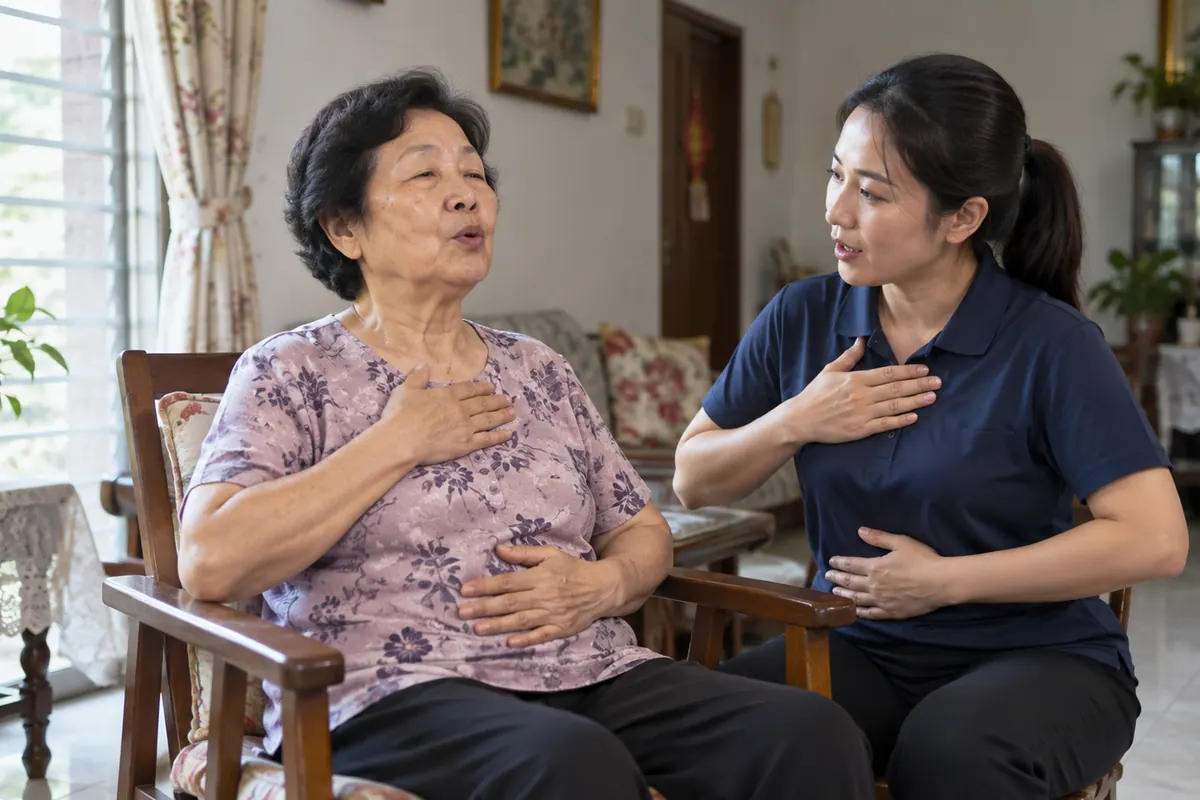
The techniques are gentle and matched to how frail the person is. They use positioning, breathing help and light hands-on methods to move phlegm so it is easier to clear.
Good positioning alone can make a real difference, helping the lungs open and drain. Raising the head with extra pillows while sleeping is a simple change that can ease breathing and help mucus clear. We choose positions the person can tolerate comfortably.
We work at a calm pace and stop if the person tires, so the care never becomes distressing.
Home set-up that helps
A bed that allows the head to be raised safely, whether with pillows or an adjustable frame, makes daily positioning easier. A clear space beside the bed helps the caregiver move around without strain.
Good light and easy access to water are simple but useful, since enough fluids help loosen mucus so it is easier to clear when swallowing is safe.
We look at the room as it actually is and suggest only what genuinely helps, not a long list of purchases. Most families already have what they need once we explain how to use it.
How progress is checked
At each visit we listen to the chest, watch how the person breathes, and ask the caregiver what has changed since last time. This is a simple, honest check, not a formal test.
Fewer rattly sounds, easier breathing, and a settled colour are good signs. We explain what we are looking for so the caregiver can notice these too, even between our visits.
If the chest is not settling, or a new symptom appears, we say so clearly and discuss whether a doctor’s review is needed. We would rather flag a concern early than wait and hope it passes.
Teaching the caregiver
Much of the benefit comes from what happens every day, so teaching the caregiver is central. We show safe positioning, gentle techniques and how often to do them.
The caregiver also learns what a settled chest looks like, and what signs mean the person needs more help.
Simple reminders are left so the family feels confident caring for the chest between visits.
Questions worth asking early
A few useful questions help a family plan. What does a settled chest usually sound and look like for this person?
Ask what to do if the chest sounds worse overnight, and which signs mean you should call a doctor rather than wait. Ask, too, how positioning should change if the person’s condition changes, and what a realistic first few weeks looks like. We answer these at the first visit, based on what we actually see, not a general script.
When hospital care is needed first
Chest physiotherapy supports comfort and clearance, but it is not a substitute for medical care in an emergency. Some situations need a hospital first.
Severe breathlessness, blue lips, a high fever, or breathing that is worsening quickly need urgent medical attention. A chest infection may need medicines a doctor prescribes.
We are glad to help the family understand when to call a doctor and when home care is enough.
If a bedridden or frail family member has a heavy, rattly chest or breathes with effort, tell us what you are seeing and we will explain how gentle chest physiotherapy at home could help.
Common questions
What does chest physiotherapy actually do?
It helps a person breathe more easily and clear phlegm they cannot cough up on their own. Using positioning, breathing help and gentle hands-on techniques, we move phlegm so it drains more easily. For bedridden or frail patients, this can ease discomfort and lower the chance of a chest infection.
Is it safe for a very frail or bedridden person?
Yes, when it is gentle and matched to the person. We start softly, watch how they respond, and stop if they tire. Positioning alone can help a great deal. For a very frail patient, the aim is comfort and easier breathing, never anything forceful or distressing.
Can you teach us to do this ourselves?
Yes. Teaching the caregiver is a core part of every visit. We show safe positioning, gentle techniques and how often to do them, and what signs mean more help is needed. Simple reminders are left so you feel confident caring for the chest between visits.
Which areas of Kedah do you cover?
We visit homes within about 30km of Alor Setar, Sungai Petani and Kulim. We do not cover Langkawi. Message us on WhatsApp with where the person lives and we will confirm whether a home visit fits their situation.
Does anything at home help between visits?
Yes, simple things help. [Raising the head with extra pillows while sleeping can make breathing easier and help the chest drain](#fact-nhs-chest-raise-head), when a doctor has not advised otherwise. We show the caregiver these small daily habits at the first visit.
Does what the person drinks matter?
It can. [Drinking enough fluids helps loosen mucus and makes it easier to clear](#fact-nhs-chest-fluids), for people who are able to swallow safely. If swallowing is a concern after a stroke or illness, we will say so and suggest checking with the treating doctor first.
Sources
- NHS guidance for a chest infection advises raising the head with extra pillows while sleeping, to make breathing easier and help clear mucus from the chest. NHS, Chest infection (2026-09)
- NHS guidance for a chest infection advises drinking plenty of water to loosen the mucus and make it easier to cough up. NHS, Chest infection (2026-09)
If a bedridden or frail family member has a heavy, rattly chest or breathes with effort, tell us what you are seeing and we will explain how gentle chest physiotherapy at home could help.