Helping an older parent avoid falls
When an older parent feels unsteady, balance work and a safer home lower the risk of a fall.
- Clinically reviewed content
- Home visits around Alor Setar, Sungai Petani and Kulim
- English and Bahasa Malaysia
- A quick reply on WhatsApp
What fall prevention involves
A fall can take away an older person’s confidence and independence in a moment. Fall prevention is the steady work of lowering that risk before it happens.
It combines two things: making the body stronger and steadier, and making the home safer to move around in. Both matter, and they work best together.
At home, a registered physiotherapist can see the real hazards and the real movement, not a guess. Older people have the highest risk of death or serious injury from a fall. That risk rises with age, which is why acting early matters.
Who benefits most
This suits older adults who have started to feel unsteady, who have slowed down, or who have already had a fall or a near miss.
It also helps parents who have begun to avoid walking or going out because they are afraid of falling. That fear itself can make the legs weaker over time.
If a parent is steady and active, simple advice may be enough, and we will say so. Falls are the second leading cause of unintentional injury death worldwide, after road traffic injuries, so a cautious approach for anyone already unsteady is reasonable.
Balance and strength that lasts
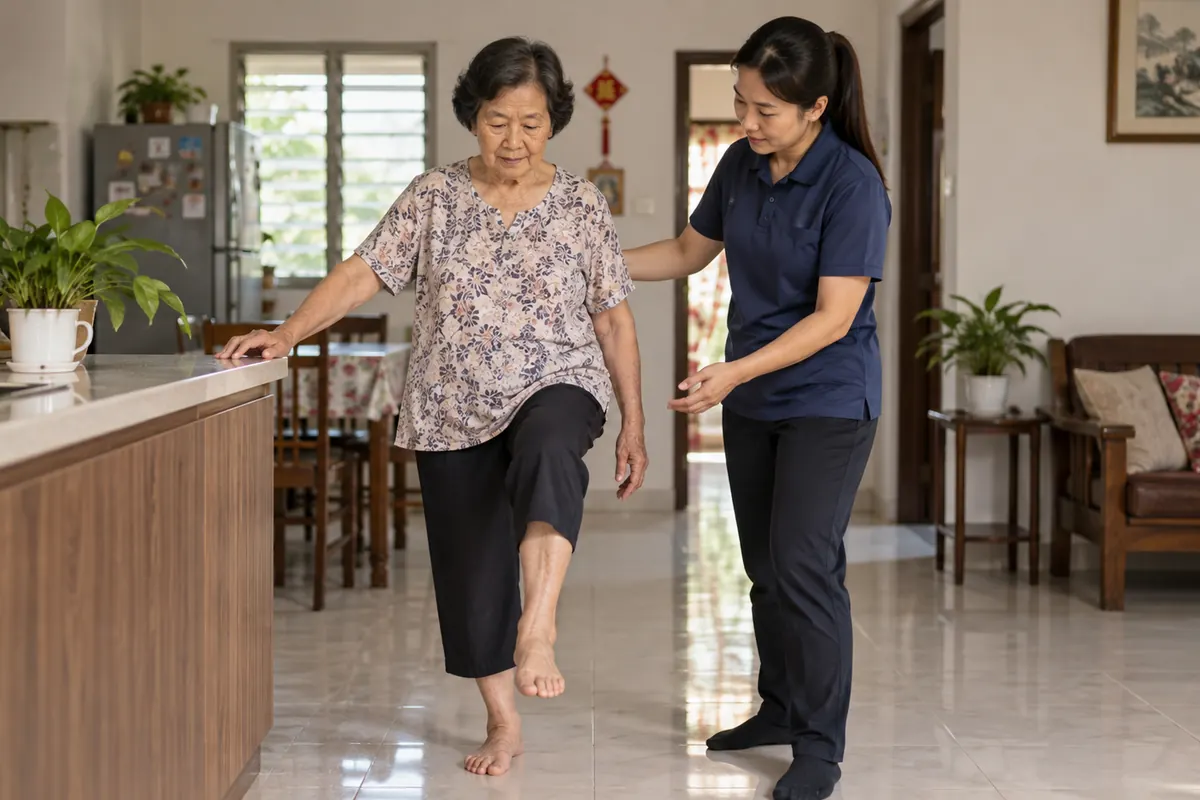
Much of the work is practising balance and leg strength in ways that carry over to daily life. We train standing steady, turning safely, and recovering balance when it wobbles.
Stronger legs make standing up, walking and climbing a step feel more secure. We build this gradually and at a safe pace.
We also look at how the person walks and whether a stick or frame would help them feel steadier.
Making the home safer
Many falls happen in familiar rooms, often on the way to the bathroom at night. Small changes make a real difference.
We look at loose mats, poor lighting, cluttered walkways and the bathroom, and suggest practical fixes. Where a grab rail or better lighting would help, we point it out.
The caregiver learns what to watch for so the home stays safe over time. NHS guidance notes that after a fall, a GP may refer someone for strength and balance training or home safety changes. A home visit can work alongside that referral.
A room-by-room look at the home
The bathroom, the bedroom and the path between them carry most of the risk, especially at night. We look at the route from bed to toilet, and whether a light is easy to reach in the dark.
In the kitchen, reaching for high shelves or standing on a stool are common risk points. In the living room, trailing cords and low, soft chairs that are hard to rise from matter too.
Outside steps, uneven paths and poor lighting at the entrance are checked as well, since many falls happen just outside the front door.
Rebuilding the confidence to walk after a scare
Fear after a fall is common, and it is not something to push through alone. Moving less to feel safer often has the opposite effect over time.
We rebuild confidence gradually, starting with short, supported practice in a familiar space. Each small success is used to build the next one.
The caregiver learns how to encourage walking without rushing the person or taking over completely.
What the family does between visits
Between visits, the caregiver keeps an eye on the small things that change day to day. A mat that has slipped, a light that has gone out, or shoes left on the stairs all matter.
Practising balance and short walks little and often, as shown at the last visit, keeps progress moving. A quiet word of encouragement matters more than pushing for distance.
If something new happens, such as a near fall, it is worth mentioning at the next visit rather than waiting.
When a fall needs a doctor first
Fall prevention is not only about exercise. Sometimes repeated falls point to a medical cause that needs a doctor’s attention.
Frequent dizziness, fainting, sudden new weakness or a fall with a head injury should be checked by a doctor before we begin. Medicines and eyesight can also play a part.
We are glad to help you decide whether a medical review should come first.
Questions worth asking early
A few plain questions help a family plan. What specifically makes a fall more likely for this person right now?
What changes at home would make the biggest difference first? How will we know the risk has actually gone down, rather than assume it has? We answer these at the first assessment.
If an older parent has started to feel unsteady or has already had a fall, tell us what happened and we will explain how balance work and a safer home could lower the risk.
Common questions
My parent has fallen once. Is that enough reason to start?
Often yes. One fall is a useful warning, and acting early can prevent the next one. We assess balance, leg strength and the home, then work on the specific weak points. Starting after a first fall is far easier than after a serious injury, so it is worth looking now.
Can you really make the home safer during a visit?
Yes. Because we visit the home, we see the real hazards: loose mats, poor lighting, the route to the bathroom at night. We suggest practical changes and show the caregiver what to watch for. Small fixes around the home often lower the risk of a fall a great deal.
My parent is now afraid to walk. Can that improve?
Yes, and it is common. Fear after a fall can make a person move less, which weakens the legs and raises the risk further. We rebuild confidence gently, with safe practice and small wins, so walking feels secure again. The caregiver learns how to encourage without rushing.
Which areas of Kedah do you cover?
We visit homes within about 30km of Alor Setar, Sungai Petani and Kulim. We do not cover Langkawi. Message us on WhatsApp with where your parent lives and we will confirm whether a home visit fits.
What does the family do between visits to keep the home safe?
The caregiver keeps an eye on the small things: a mat that has slipped, a light bulb that has gone, shoes left on the stairs. We leave a short checklist after the first visit so nothing important is forgotten.
How do you check whether the risk has actually gone down?
We compare balance, leg strength and walking against the first assessment, not against a fixed date. If a specific worry, such as getting up at night, has not improved, we say so and adjust the plan rather than continuing unchanged.
Sources
- WHO states that older people have the highest risk of death or serious injury from a fall, and that risk increases with age. WHO, Falls fact sheet (2026-09)
- WHO reports that falls are the second leading cause of unintentional injury death after road traffic injuries. WHO, Falls fact sheet (2026-09)
- NHS guidance notes that if someone has had falls, a GP may refer them for help such as strength and balance training or changes to make their home safer. NHS, Falls prevention (2026-09)
If an older parent has started to feel unsteady or has already had a fall, tell us what happened and we will explain how balance work and a safer home could lower the risk.