Recovering well after surgery at home
After knee, hip or fracture surgery, guided recovery at home helps you move again without setbacks.
- Clinically reviewed content
- Home visits around Alor Setar, Sungai Petani and Kulim
- English and Bahasa Malaysia
- A quick reply on WhatsApp
What post-surgery rehabilitation is
After surgery, the body needs to move again to heal well. Post-surgery rehabilitation is the guided process of restoring movement, strength and confidence around the operated area.
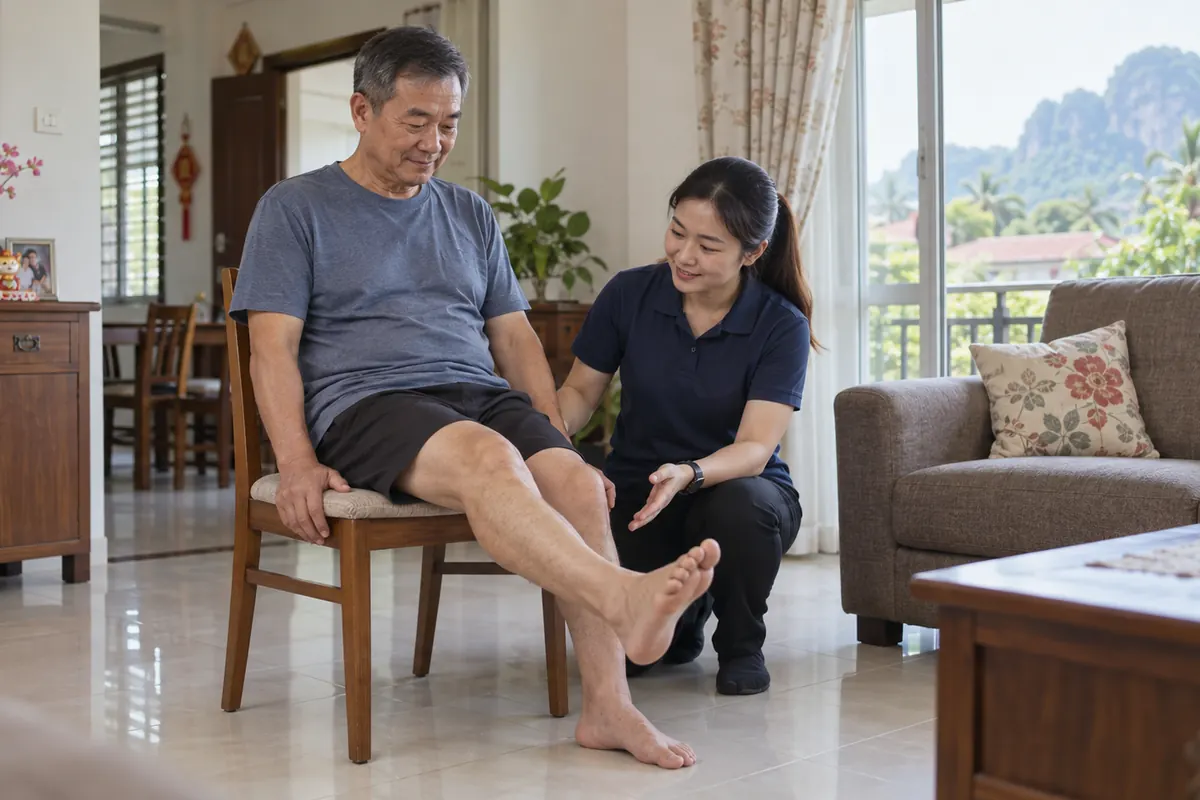
At home, a registered physiotherapist works with you where you rest and recover. This suits people who find travel painful or unsafe in the first weeks after an operation.
The plan follows what the surgeon allows, and it grows gradually as the tissue heals. Guidance for hip and knee replacement supports giving people advice on preoperative rehabilitation, including exercises that aid recovery before and after surgery.
Who this helps most
This helps people recovering from knee or hip replacement, fracture repair, and many other orthopaedic operations. It also suits older adults who become weak and stiff after a hospital stay.
People who live alone, or who have stairs and no easy way to a clinic, often recover more safely with visits at home.
If the recovery is straightforward and you can travel comfortably, an outpatient clinic may suit you just as well.
What the first weeks usually look like
The first weeks focus on protecting the repair while restoring basic movement. Rehabilitation, including a home exercise programme and early mobilisation, is offered on the day of surgery if possible and no later than 24 hours after a hip, knee or shoulder replacement. Home follow-up continues that early start.
A physiotherapist checks the wound area for safety, then works on gentle range of movement, transfers and short, safe walking with any aid the surgeon has advised.
Rest matters as much as practice in these first days. We keep sessions short and build gradually rather than pushing for quick gains.
Home set-up and equipment
A stable chair with arms, a raised toilet seat if needed, and a clear path from bed to bathroom reduce strain in the first weeks. Loose rugs and trailing cables are worth removing before you come home.
Walking aids such as crutches, a frame or a stick are used only as long as they are genuinely needed, following the surgeon’s advice. We check that any aid fits correctly and is being used safely.
Simple planning before the operation date, where possible, makes the first days at home noticeably calmer.
When to start and how it progresses
For many operations, gentle movement begins within days, following the surgeon’s guidance. Waiting too long can leave a joint stiff and weak.
Early sessions protect the healing area while restoring simple movement and safe walking. As healing allows, we add strength, balance and the tasks you need for daily life.
We review progress openly and adjust the pace to how the body is responding.
How progress is checked
At each visit, a physiotherapist measures how far the joint can move, how the walking pattern looks, and how swelling and pain compare with the last visit. This is checked against the general stages your surgeon would expect for your operation.
Photos are not needed. A short, consistent set of checks at each visit is usually enough to see a clear direction, whether that is steady improvement or a stall that needs attention.
We explain these checks in plain terms, not just numbers, so you understand what they mean for daily life.
Avoiding setbacks and re-injury
A good recovery is steady, not rushed. Pushing too hard too soon can swell a joint or strain a repair, so we build load carefully.
We teach you how to move, sit, and get in and out of bed in ways that protect the operated area. The caregiver learns how to help without taking over.
We also explain the warning signs that mean contacting your surgeon rather than continuing exercises.
When an outpatient clinic fits better
Home rehabilitation is not the only good route. Some people recover well at an outpatient physiotherapy clinic, especially when they can travel easily.
A clinic offers larger equipment and gym space that can help in the later, stronger stages of recovery. For a complex repair that needs close surgical follow-up, hospital-based review comes first.
We are happy to talk through which setting matches your recovery before you decide.
If someone in your family is recovering from surgery and movement feels stuck or uncertain, message us with the operation and date and we will explain how home rehabilitation could help.
Common questions
How soon after surgery should physiotherapy start?
It depends on the operation and your surgeon's advice. For many joint and fracture surgeries, gentle movement begins within a few days to keep the area from stiffening. We always follow the surgical plan, and after assessing you at home we explain a safe pace to begin.
Will the exercises hurt the healing area?
Early exercises are gentle and chosen to protect the repair while keeping the joint moving. Some mild discomfort is normal, but sharp pain is a signal to ease off. We teach you the difference and adjust each session to how your body is healing that week.
Can you help after a knee or hip replacement at home?
Yes. Recovery after knee and hip replacement is a common reason families call us. We work on safe walking, regaining bend and strength, and moving around the home again. We follow your surgeon's protocol and teach the caregiver how to help between visits.
Should we prepare the home before the surgery date?
It helps. A stable chair with arms, a clear path to the bathroom, and removing loose rugs make the first days home much safer. We can advise on a simple setup during an assessment booked before or soon after the operation.
How is progress checked after surgery?
A physiotherapist checks the range of movement in the joint, walking pattern, swelling and pain at each visit, and compares this with your surgeon's expected recovery stages. We explain what we see, including when something needs the surgeon's review.
Do you cover my town in Kedah?
We visit homes within about 30km of Alor Setar, Sungai Petani and Kulim. We do not cover Langkawi. Send us your location on WhatsApp and we will confirm whether a home visit works for your recovery.
Sources
- NICE guideline NG157 recommends giving people having hip or knee replacement advice on preoperative rehabilitation, including exercises to do before and after surgery that aid recovery. NICE NG157, Joint replacement (primary): hip, knee and shoulder (2026-09)
- NICE guideline NG157 recommends that a physiotherapist or occupational therapist should offer rehabilitation, on the day of surgery if possible and no more than 24 hours after surgery, to people who have had a primary elective hip, knee or shoulder replacement, including a home exercise programme and mobilisation. NICE NG157, Joint replacement (primary): hip, knee and shoulder (2026-09)
If someone in your family is recovering from surgery and movement feels stuck or uncertain, message us with the operation and date and we will explain how home rehabilitation could help.