Physiotherapy for joint and muscle problems
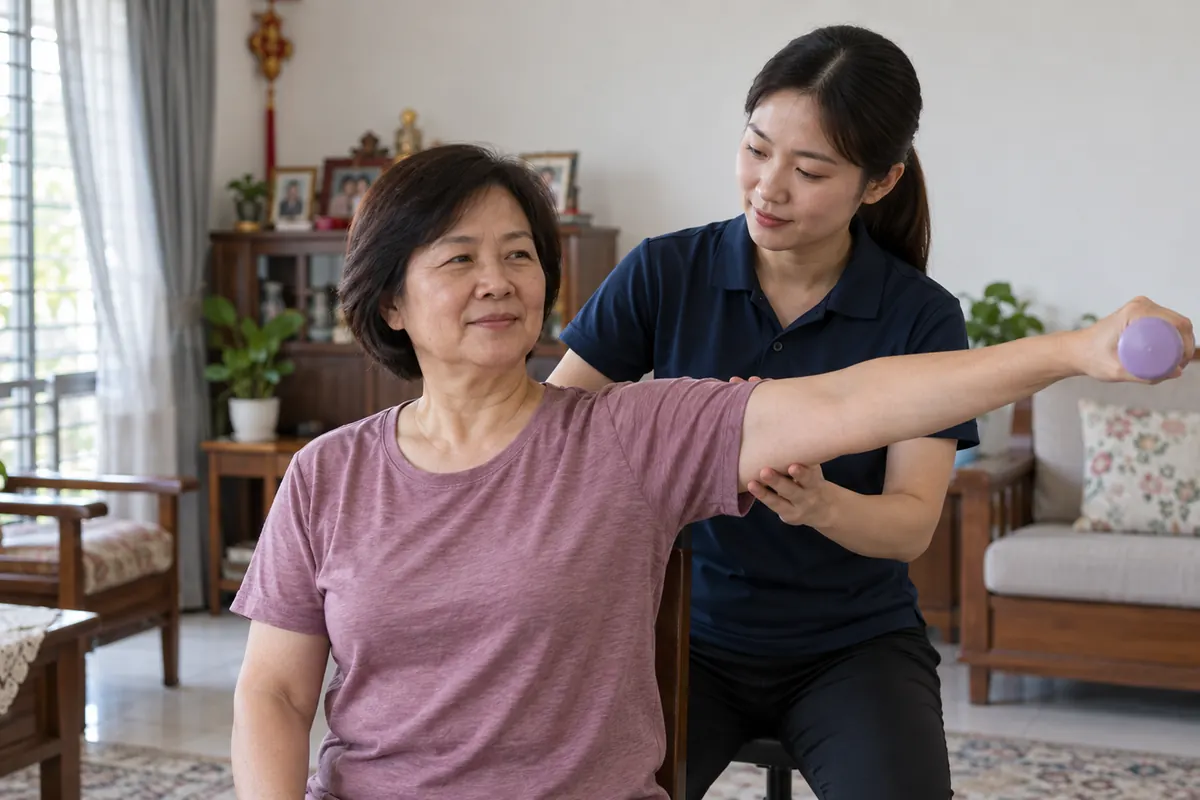
When a stiff shoulder or aching joint limits daily life, guided movement at home helps restore it.
- Clinically reviewed content
- Home visits around Alor Setar, Sungai Petani and Kulim
- English and Bahasa Malaysia
- A quick reply on WhatsApp
What orthopaedic physiotherapy is
Orthopaedic physiotherapy is for problems of the bones, joints, muscles and soft tissues. It covers common complaints like frozen shoulder, a slipped disc, and painful or stiff joints.
The aim is to restore movement, build strength and ease pain so daily life feels easier. Treatment uses guided exercise, hands-on techniques and clear advice.
At home, the plan fits the tasks and spaces you actually use each day.
Who this helps
This helps people with a painful or stiff shoulder, knee, hip or back that limits daily activity. It also suits those recovering from a strain, a sprain or an old injury that never fully settled.
Many people prefer home sessions when travel is painful, when they work long hours, or when getting to a clinic is simply hard.
If you are active and mobile, a clinic can work well too, and we will say so.
Working adults who cannot easily take time off during clinic hours often find home visits fit around a normal day. Older adults who find transport tiring benefit in the same way.
Common problems we work with
A frozen shoulder slowly loses its range and can make dressing or reaching painful. We work to restore movement gradually and ease the stiffness, since keeping the shoulder still tends to make the pain worse. A course of treatment usually runs at least six weeks, with the pace set by how the shoulder responds.
Back pain from a slipped disc often needs the right movement rather than complete rest. Guidance for low back pain recommends staying active and a group exercise programme rather than bed rest, and we guide safe exercise and posture that settle the pain over time.
Joint pain in the knee or hip usually improves with the right strength and movement, and we build these carefully.
What home set-up helps most
A firm chair with arms, a clear path between rooms, and enough space to stand and stretch are usually all a home session needs.
For a stiff shoulder, a low table or counter can help with early reaching practice. For back or hip pain, a supportive mattress and a chair of the right height matter more than any special equipment.
We work with what your home already has. Where a small aid would genuinely help, we explain the reason before suggesting it.
Simple habits also matter, such as sitting for shorter periods with more breaks, or changing which arm carries the shopping. Small changes like these often make the exercises easier to keep up.
How progress is checked
Each visit starts with a quick check of movement, pain and how the joint has coped since the last session. This is not a formal test, just a clear look at where things stand.
We track a few simple markers, such as how far an arm reaches or how long a walk feels comfortable. Small changes over several visits matter more than any single day.
If progress stalls, we say so and discuss why, rather than continuing the same plan unchanged. We also ask what you have noticed day to day, since that often shows change before any measurement does.
How a home plan works
The first visit is an assessment of the joint, your movement and how the problem affects daily life. From there we set clear, realistic goals.
Each session combines hands-on techniques with exercises you can continue on your own. The plan grows as movement and strength improve.
We teach you how to keep progressing between visits, so the improvement holds rather than fading.
What to ask before you start
A few useful questions help you plan. What does a realistic first month usually involve, and how will we know it is working?
Ask what your part is between visits, and what signs mean you should slow down rather than push through. Ask, too, when a scan or a doctor’s opinion would change the plan.
We answer these at the first assessment, based on what we actually find, not a general script.
When a clinic or scan is better first
Home physiotherapy suits many joint and muscle problems, but not every case starts here. A clinic with larger equipment can help in the stronger stages of recovery.
Some problems need a scan or a doctor’s diagnosis first, especially new severe pain, pain after a bad injury, or symptoms like numbness spreading down a limb. In those cases a doctor should see you before a plan begins.
We are glad to help you judge which step fits.
If a stiff shoulder, sore back or aching joint is limiting your daily life, tell us where it hurts and how long it has lasted, and we will explain how home physiotherapy could help.
Common questions
Can you help a frozen shoulder at home?
Yes. A frozen shoulder responds well to steady, guided movement over time. We work to restore range gently, ease the stiffness, and rebuild strength, while teaching you exercises to continue between visits. Progress is usually gradual, and we explain a realistic timeline after the first assessment.
Is physiotherapy safe for a slipped disc?
For many people, yes, guided movement helps more than complete rest. We choose exercises and postures that settle the pain and protect the back. If there are warning signs, such as numbness spreading down a leg, we will advise a doctor's review first. Safety guides every session.
How is this different from a massage?
A massage can feel good but often eases pain only for a while. Orthopaedic physiotherapy assesses why the problem is there, then uses exercise and hands-on work to change it. The goal is lasting improvement in movement and strength, not just short-term relief, so the problem is less likely to return.
Which areas of Kedah do you cover?
We visit homes within about 30km of Alor Setar, Sungai Petani and Kulim. We do not cover Langkawi. Send us your location on WhatsApp and we will confirm whether a home visit fits your situation.
How long does frozen shoulder treatment usually take?
It varies, but [a course of physiotherapy for frozen shoulder usually runs at least six weeks](#fact-nhs-frozen-shoulder-course). The exact number of sessions depends on how the shoulder responds. We review progress regularly and adjust the plan as movement returns.
What equipment do I need at home for this?
Very little, usually. Most sessions use your own furniture, a firm chair and enough floor space to move safely. If a small aid such as a resistance band would help, we explain why before suggesting it, and it stays optional.
Sources
- NHS guidance on frozen shoulder advises keeping the shoulder moving, since keeping it still makes the pain worse. NHS, Frozen shoulder (2026-09)
- NHS guidance notes a course of physiotherapy for frozen shoulder usually lasts at least 6 weeks, with the number of sessions depending on how quickly the shoulder improves. NHS, Frozen shoulder (2026-09)
- NICE guideline NG59 recommends a group exercise programme, and advice to keep active, as part of managing low back pain and sciatica. NICE NG59, Low back pain and sciatica in over 16s (2026-09)
If a stiff shoulder, sore back or aching joint is limiting your daily life, tell us where it hurts and how long it has lasted, and we will explain how home physiotherapy could help.