Physiotherapy that comes to your home
When getting to a clinic is the hardest part of the day, the physiotherapist comes to you.
- Clinically reviewed content
- Home visits around Alor Setar, Sungai Petani and Kulim
- English and Bahasa Malaysia
- A quick reply on WhatsApp
What home-visit physiotherapy means
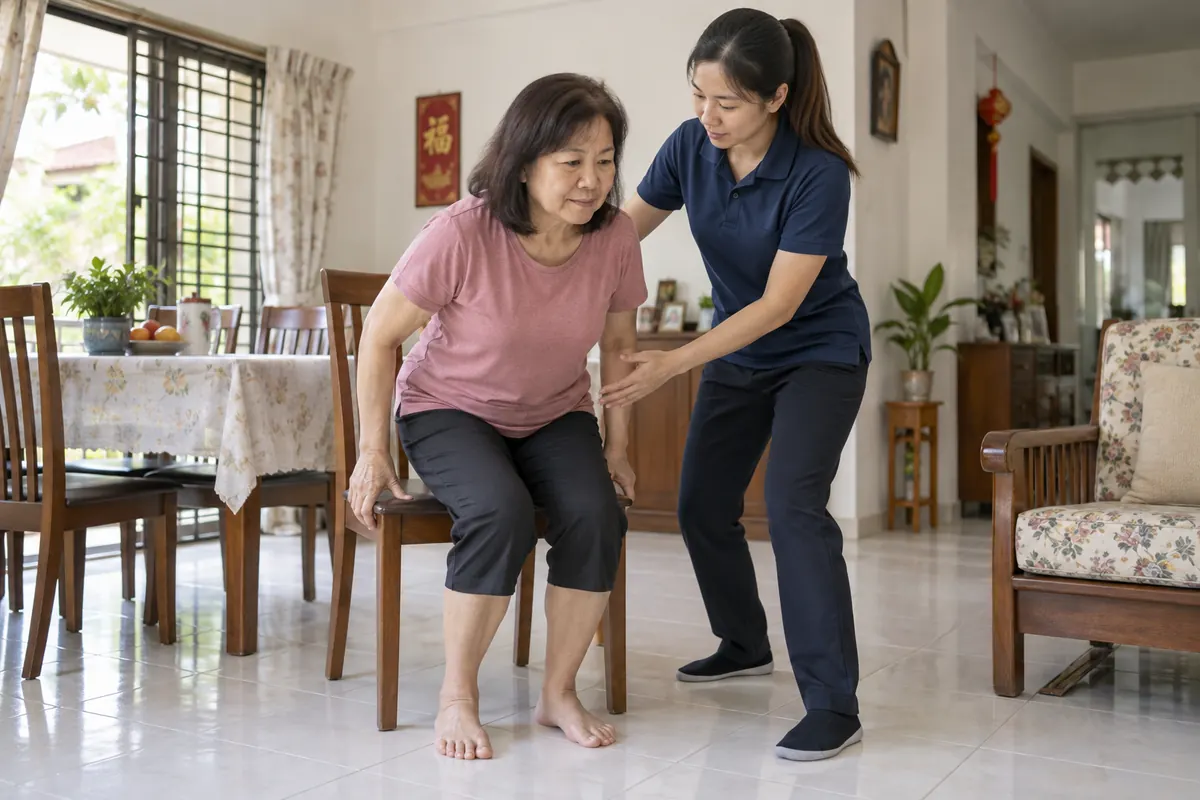
Home-visit physiotherapy, sometimes called domiciliary physiotherapy, is treatment brought to the patient’s home instead of a clinic. A registered physiotherapist travels to you, assesses the person where they live, and works on movement in the same rooms they use every day.
This suits people for whom the journey itself is the barrier. A stroke survivor, a frail parent, or someone recovering from surgery often cannot sit in a car or wait in a clinic without pain or risk.
At home, the plan fits the real setting: the bed they get out of, the step at the door, the bathroom they need to reach safely. Rehabilitation itself can be delivered in many settings, including hospital, outpatient and community settings such as a person’s own home.
Who gets the most from it
The people who benefit most are those who cannot travel comfortably, or for whom a familiar setting makes recovery safer and calmer.
This includes stroke survivors early after discharge, older adults who have become weak or unsteady, and patients recovering from knee, hip or fracture surgery. It also helps people who are bedridden and need help to avoid stiffness and pressure sores.
If the person can travel easily and prefers gym equipment, a clinic may serve them better. We say so.
What the first weeks usually look like
The first weeks focus on finding a safe starting point, not big goals. The physiotherapist rechecks how the person manages transfers, short walks and everyday tasks.
Short, frequent practice suits this stage better than long, tiring sessions. A few minutes of standing, a supported walk to the door, or careful hand exercises are common starting points.
People who can move from bed to chair independently, or with assistance, in a safe environment are often good candidates for early home-based support. That is part of why a home plan can often begin soon after discharge, once the hospital team agrees it is safe.
Home set-up and equipment
A few changes to the home often make practice safer straight away. A stable chair, a clear path to the bathroom, and good lighting reduce the chance of a stumble.
Equipment such as a walking frame, a raised toilet seat or a grab rail is suggested only when it is genuinely needed. The physiotherapist explains why before anything is added.
Nothing is bought or fitted without the family agreeing to it first.
How a visit works
The first visit is an assessment. The physiotherapist checks how the person moves, what they can do safely, and what the family most wants back, such as walking to the bathroom without help.
From there you get a clear plan with a small number of goals. Each session builds on the last, and the caregiver is shown what to practise in between.
Progress is reviewed openly. If something is not working, the plan changes rather than continuing for its own sake.
How progress is checked
Progress is measured against the goals agreed at the first visit, not by guesswork. At each session the physiotherapist notes what has changed in strength, balance, or how confidently the person moves.
If a goal is not being reached the way expected, the plan is adjusted rather than continued unchanged. The family is told what changed and why.
Small, steady gains matter more than one dramatic session. A short walk that was not possible two weeks ago is real, measurable progress.
Better options when home care is not enough
Home physiotherapy is not always the right first step, and saying so is part of doing this well.
When someone has sudden new weakness, a high fever, chest pain, or a wound that looks infected, the hospital comes first. For a condition that still needs a specialist diagnosis, an orthopaedic or rehabilitation doctor should see the person before a home plan begins.
We are glad to explain which route fits before you commit to anything.
How we work with the family
A home visit is only as good as what happens in the days between visits. That is why teaching the caregiver is part of every session.
We show you safe ways to help the person stand, move and exercise, and what to avoid so no one gets hurt. Simple written reminders are left where they are easy to find.
The aim is for the family to feel confident, not dependent on us for every small task.
Questions worth asking early
A few useful questions help a family plan well. How many sessions are likely to be needed, and how often will the plan be reviewed?
What should the caregiver practise alone, and what should wait for a supervised visit? We answer these at the first assessment, based on what we actually see in the home.
If you are unsure whether a home visit is the right first step, send us a short message describing the person's situation and we will explain what we would suggest.
Common questions
Do I need a doctor's referral for home physiotherapy?
In Malaysia you do not need a referral to see a physiotherapist directly. That said, if the person has a complex or recent medical event, we may ask a few questions first and suggest a doctor's review when it is the safer step.
How many sessions will we need?
It depends on the goal and the person. Some need a short block to recover after surgery, others need longer support after a stroke. After the first assessment we explain what a realistic plan looks like, and you decide from there.
Which areas of Kedah do you cover?
We visit homes within about 30km of Alor Setar, Sungai Petani and Kulim. Tell us where you are on WhatsApp and we will confirm whether a visit fits.
Is home physiotherapy as effective as a clinic?
For most stroke, elderly and post-surgery goals, working at home is effective because the exercises match daily life. For goals that need heavy gym equipment, a clinic can add value, and we will tell you when that applies.
What happens in the very first week?
The first visit is mostly assessment: checking movement, safety and what matters most to your family. From there we agree a few small goals and begin gentle, short practice. It is normal for the first week to feel slow while everyone finds a safe starting point.
Do you provide equipment such as a walking frame?
We assess whether equipment would genuinely help, such as a walking frame or a grab rail, and explain why before suggesting it. We do not add equipment the person does not need. Where equipment is needed, we point you to a suitable source.
Sources
- WHO states rehabilitation can be delivered in many different settings, including hospital, outpatient and community settings such as a person's own home. WHO, Rehabilitation fact sheet (2026-09)
- NICE guideline NG236 supports early supported discharge for people who can move from bed to chair independently or with assistance, in a safe environment. NICE NG236, Stroke rehabilitation in adults (2026-09)
If you are unsure whether a home visit is the right first step, send us a short message describing the person's situation and we will explain what we would suggest.